Tips and thoughts from a wonderful chef friend of mine . . . he knows what he’s talking about!
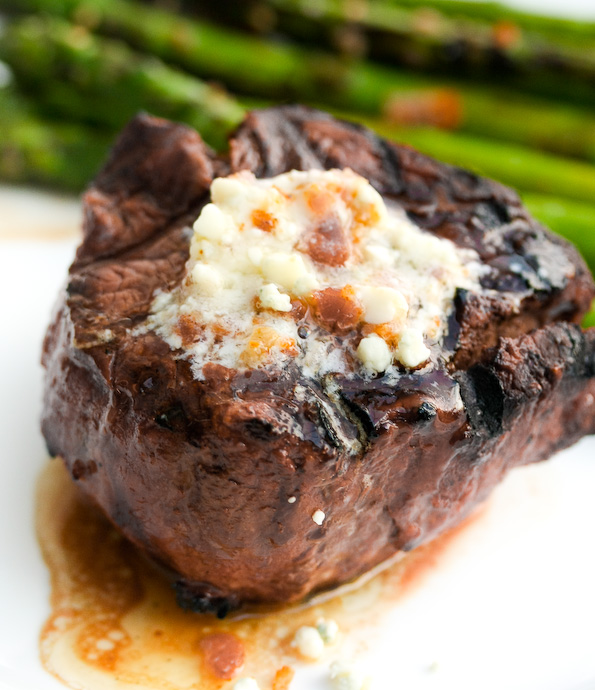 You cannot help but to look at two different steaks in the store and wonder why one is 3 times as expensive as the other. Often times we tend to accept a lower quality steak just so it doesn’t hit our wallets so bad. However, there are some good tips to help you pick the best steak regardless of the price points.
You have lots of options as a steak lover, each with their own pros and cons. The first hurdle we are going to look at, because, honestly, it is the problem we usually confront with all of our decisions – price.
Cuts Make a Difference
Lots of factors affect how much a steak costs, like the cut of meat, the type of feed the animal ate and even the breed of the cow itself. The cuts break down from most to least expensive in this way: filet mignon, ribeye, strip and sirloin.
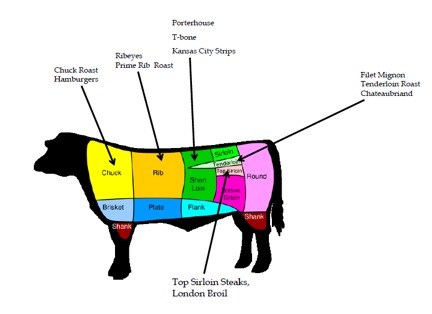
There are lots of other cuts but we won’t worry about those since they don’t really fall into the “steak” category most of us traditionally think of. Each of these cuts come from a particular muscle in the animal, the filet from the tenderloin (which runs through the hindquarter of the animal and through the short loin and sirloin cuts), the ribeye from the rib section and the strip from the short loin. The Porterhouse and T-bone come from here as well but we will cover those later. And finally, the sirloin from the sirloin.
These selections all make ideal steak choices for one important reason – tenderness. Muscles that get used more frequently tend to be tough. That is why you don’t often see steaks from the round (rear leg) section thrown on the grill. They taste great, but you will be chewing for a long time. In order of tenderness the steaks above go as follows, filet mignon (from the tenderloin, tender-loin, get it?) ribeye, strip and sirloin.
This follows our price list above. There is a direct correlation between how tender a steak is and how much it costs. Other cuts you might see in the store are flank, plate, chuck or round steaks. But these will all be very tough if cooked in the traditional “steak” methods.
Another thing to keep in mind is that muscles that are used more frequently, and are therefore tougher, also happen to have a more robust flavor. This has to do with more blood circulation through the muscle while the animal is alive. Chuck, or shoulder as it would be called to those of us non-butchers, can be extremely tough. But it is a beefier tasting beef.
So back to our steaks. There is nothing that compares to the soft, velvety mouth-feel of a filet, but more than a few steak enthusiasts lament its subtle beef flavor and prefer a ribeye or strip because it offers more of that classic beef taste. Sirloin at the bottom end of the toughness scale (and still quite tender, really) has the best flavor of the steaks. Ribeye and strip tend to give you the best balance in terms of cost, flavor and tenderness.
USDA Grading – What is It?
So now you know where the steaks come from, but what about all those words advertisers stick to them like Angus or Prime? All meat is inspected by the USDA for wholesomeness. This means if it is sold, it is legally fit for human consumption. Unfortunately, that is a pretty low bar, so the USDA has a grading system.
Grading is a voluntary system that beef producers allow their meats to be graded on in several categories. The long and short of it is a delicate balance of fat to lean meat, plus the age of the animal.
The younger the animal and the higher the fat marbling of the meat, the higher (and therefore more expensive) the grade. The only grades you want to consider, (even though there are eight of them, the bottom few named “canner” and “cull” – yum, right?) are prime, choice and select.
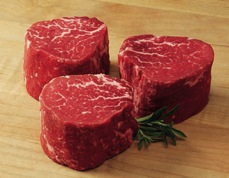
Prime Filets
Prime can be very expensive and has beautiful fat marbling in a very tender steak. Steak image courtesy of KansasCitySteaks.com
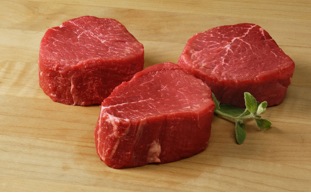
Choice Steaks
Choice offers a great value of marbling and tenderness at a fair price.
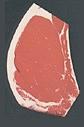
Select Steak
Select has much less marbling. (Used by permission of USDA.gov)
But, remember, you only want to go with the most tender cuts. Don’t be taken in by names like Angus or Wagyu. They typically mean much higher prices. Certain breeders of cattle specialize in one breed, like Angus, Black Angus or the ridiculously expensive Wagyu (this is a breed of cow from Kobe, Japan, where the animals have beer with their breakfast and at a minimum one hour of massage a day. It can also cost well over $100 per lb.). These breeder associations have created their own system to market their cows with their own standards, not the USDA’s. Because of that, they can charge a pretty penny.
Dry Aging or Wet Aging?
Another component to look for is aging. I’m gonna get a little technical and gross here (and I mean very little technical). When an animal is butchered the muscles go through rigor mortis where it becomes tough, and over time the muscles soften. This freshly butchered meat is called green meat. You don’t want that. It’s not actually green by the way, the term green refers to age, not color.
Green meat is tough and chewy. The muscles need to relax before you try cooking them. A reputable supplier only sells meat that has been aged properly. There are two ways to age: dry and wet.
Dry aging is expensive and very difficult to find. The meat is hung in a temperature and humidity controlled environment and allowed to rest for a set period of time. Eleven days or so has proven to be the magic number here where tenderness no longer increases. One of the reasons dry aging is so expensive is that you have considerable moisture loss and therefore a higher cost per pound.
Wet aging occurs when meat is packed into vacuum-sealed packaging and allowed to rest in its own liquid (sounds worse than it is). Many consumers prefer wet aging because dry aging sometimes imparts a musty, basementy aroma.
Where Can I Buy Quality Steaks?
So now you know what cut to look for and what grade you want. So where do you go? You should look for a butcher like you do a mechanic. A good one is hard to find. Once you find one, ask questions like, “Where do they get their beef from?” “Is it grain fed?” “How is their meat aged?”
A good butcher will answer all of these questions. Shop around and go to Web sites for information. There is plenty out there.
Hopefully this gives you some food for thought!